
Airport Fuel Farm Expansion: Engineering, Permitting, and Procurement Signals
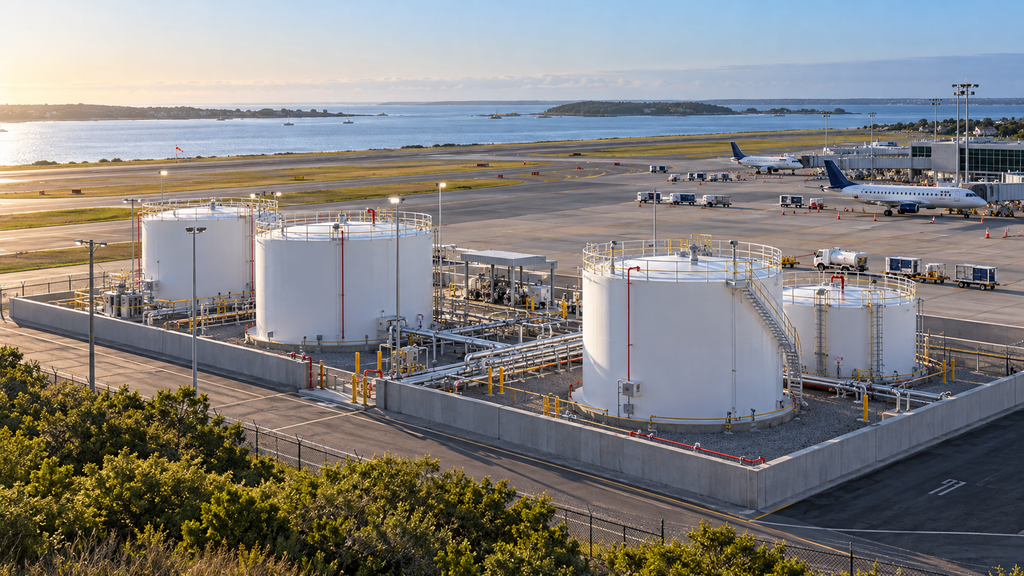
An airport fuel farm expansion can start as a storage-capacity problem and grow into a coordinated infrastructure program. Additional tanks may require changes to fuel transfer equipment, containment, drainage, electrical systems, fire protection, and operating procedures.
For engineering consultants, environmental specialists and construction firms, the useful question is which part of that program is taking shape. Public records can reveal the operational problem, anticipated service scope, and procurement route before every work package is advertised.
Nantucket Memorial Airport offers a timely example. Its planned expansion connects aviation fuel storage needs with facility design, permitting, and construction oversight. Understanding those connections helps firms assess project fit without assuming that a planning discussion means an open contract.
Nantucket’s Fuel Farm Expansion Shows Why Contract Scope Matters
Osserva’s Nantucket airport fuel infrastructure insight reports that an October 9, 2026 fuel subcommittee meeting advanced a multimillion-dollar expansion. The insight describes potential procurement through a bundled fuel supply solicitation or separate engineering and inspection contracts.
An earlier primary record provides additional context. Nantucket’s 2026 on-call engineering RFQ lists fuel farm expansion among anticipated non-AIP projects and provides for individual project authorizations. Its submission deadline was March 25, 2026.
The distinction matters: a broader engineering procurement can precede later project-specific work. Firms evaluating the expansion should confirm current authorizations, consultant roles, and the exact package still available before treating it as a bidding opportunity.
Airport Fuel Storage Infrastructure Requires More Than Additional Tanks
Storage volume is only one part of aviation fuel system design. A larger inventory does not automatically solve delivery constraints, transfer bottlenecks, or limited access to fueling equipment.
A practical engineering assessment should ask:
- What peak demand must the facility serve, and how often can deliveries replenish inventory?
- Can existing pumps, piping and loading equipment support the proposed operating pattern?
- How will the layout separate fuel movements, maintenance access and construction activity?
- What changes are needed to containment, drainage and emergency response arrangements?
- How will existing fueling continue while new infrastructure is installed and commissioned?
These questions link operational needs to the eventual scope of services. They also help distinguish a tank supply requirement from a larger civil, mechanical, electrical and environmental project.
Airport Fuel Farm Engineering Connects Safety and Operations
The FAA’s Advisory Circular 150/5230-4C addresses aviation fuel storage, handling, dispensing, and personnel training. It provides an important reference for evaluating how a proposed facility will operate as a complete system.
The circular is not a standalone regulation. It identifies an acceptable means of meeting relevant Part 139 requirements, and its standards apply by default to projects funded through specified federal grant assistance and Passenger Facility Charge programs. The funding source and airport’s circumstances therefore matter when defining requirements.
For prospective project teams, the early task is to identify the applicable standards, agency reviews, and operational constraints. Qualifications should link comparable experience to the actual scope, such as fuel system integration, airport construction coordination, or construction-phase inspection.
Fuel Storage Permitting Starts with Containment and Site Conditions
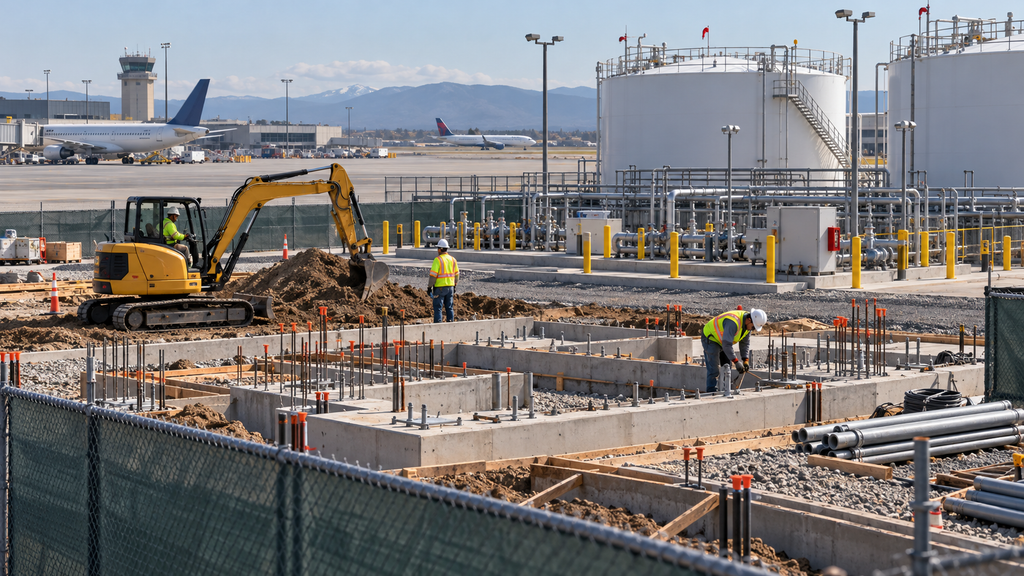
Evaluate fuel storage permitting alongside preliminary design. Tank placement, site drainage, fire access, and environmental conditions can influence the project’s footprint and sequence.
For facilities subject to applicable Spill Prevention, Control, and Countermeasure requirements, EPA explains that bulk storage secondary containment must accommodate the largest single tank and sufficient freeboard for precipitation. That requirement can affect grading, containment walls, and usable site area.
EPA identifies a 25-year, 24-hour storm as an appropriate benchmark for most facilities, but does not establish that event as a universal rule standard. Design teams should evaluate the applicable provisions and site conditions rather than substitute a generic containment detail.
Early review should also establish which local and state approvals apply, what information reviewers need, and whether the operating facility’s spill prevention documentation requires revision. A permit milestone can indicate progress, but it does not establish funding approval or a construction start date.
Construction Oversight Must Address an Operating Airport
Airport construction oversight involves more than tracking installation progress. A fuel facility project may need to preserve access for deliveries and refueling vehicles while coordinating temporary arrangements, restricted work areas, and system tie-ins.
Before bidding, firms should review expected shutdown windows, airport access requirements, inspection responsibilities, and the acceptance process. A proposal should explain how the team will coordinate civil work, equipment installation, and operational handover.
Nantucket’s closed 2021 Fuel Farm Upgrades Phase III solicitation illustrates how broad a fuel facility package can become. It included replacement fueling skids and fire suppression systems, with anticipated sub-bids for electrical, fire suppression,, and metal fabrication. That historical scope is useful context, not evidence of the current expansion’s final design or bid requirements.

Which Public Records Reveal Airport Procurement Signals?
A useful signal combines a stated need with evidence of project development. Track the documents that explain how the airport intends to move from that need to an authorized scope.
| Public record | What to assess | What to verify next |
| Airport commission or fuel subcommittee records | Capacity concerns, preferred alternatives and requested actions | Whether the action was approved or only discussed |
| Capital plans and budget documents | Estimated cost, proposed funding and project sequence | Whether funding is appropriated and scope remains current |
| Engineering RFQs and project authorizations | Consultant responsibilities and delivery structure | Which services are assigned and which remain unprocured |
| Permit applications and hearings | Facility configuration and review progress | Outstanding conditions and effects on design |
| Solicitations and addenda | Formal scope, eligibility and submission requirements | Current deadlines, amendments and award status |
A bundled fuel supply and infrastructure solicitation may create a different route to participation than separate engineering and construction contracts. Depending on the final documents, a specialist could pursue a prime role, a subcontract or a teaming arrangement. Assess those possibilities against the published procurement requirements.
Translate Airport Fuel Farm Signals into a Specific Project Fit
The strongest opportunity assessment identifies the problem, the work package, and the next decision. For airport fuel farm expansion, that means connecting storage and delivery needs to design, environmental review, equipment integration, and construction oversight.
Before pursuing a signal, establish who owns the project, which firms are already involved, what approvals remain, and how the next scope will be procured. This produces a more useful qualification decision than treating every capital planning reference as an available contract.
Explore Osserva’s Nantucket airport fuel farm signal for the project context behind this example.