
How to Find Public Construction Projects in the Planning Stage
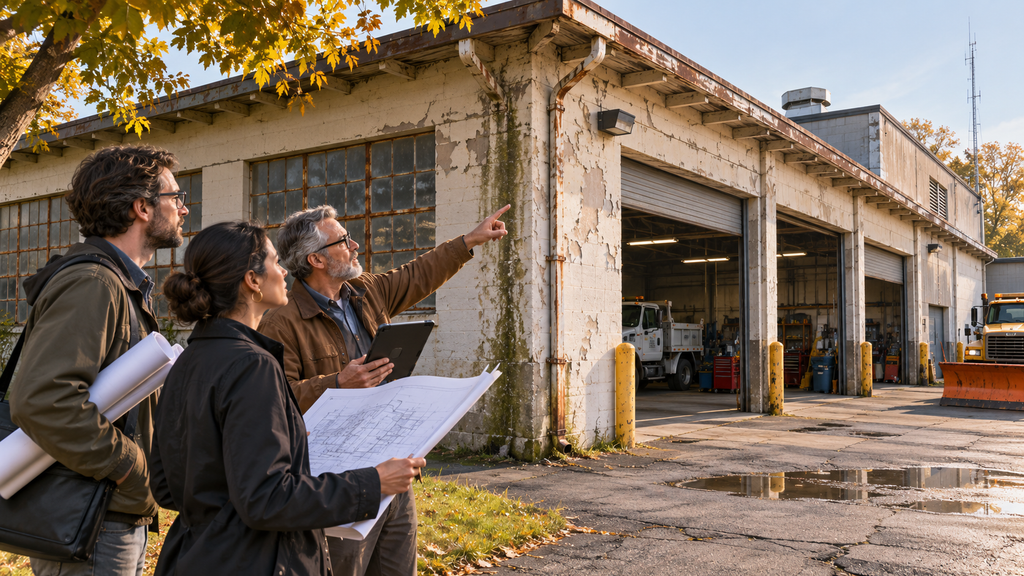
A city’s maintenance garage has run out of space. Its vehicle bays can’t accommodate newer equipment, and the public works department is weighing expansion against moving to another site. By the time the city publishes an RFQ, it may already have narrowed the alternatives, estimated costs, and identified the first phase.
For architecture, engineering, and construction firms, those earlier decisions can reveal where their services fit. Here’s how to find public construction projects in the planning stage and decide which ones belong in your pipeline.
Start with three public records
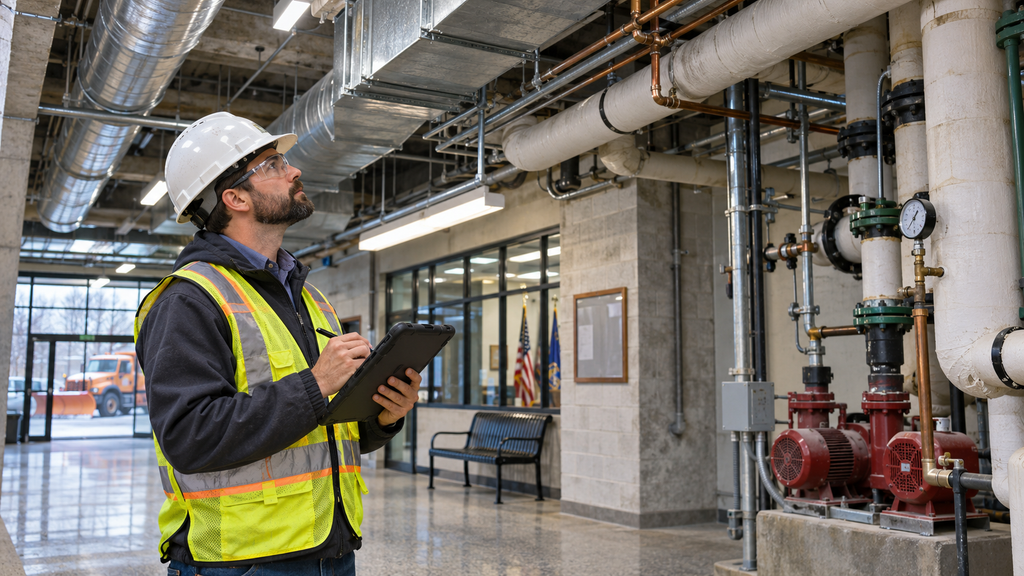
Facility condition assessments show what the owner needs to fix. Look for findings tied to a building, system, or operational constraint. A maintenance building with inadequate ventilation and undersized bays could warrant a mechanical assessment, architectural programming, or a study of expansion options. The agency’s recommended next action helps narrow the likely scope.
Master plans and capital improvement plans show how the owner proposes to address the need. Search for your target facility types, such as maintenance buildings, public offices, or educational facilities. Look for the phase listed alongside the project. A line item for feasibility or design tells you more about near-term A&E work than the total value of a multiyear program.
Board and council records show what the owner has authorized. Read the staff recommendation and the recorded action together. A board can receive a study, approve planning funds, authorize staff to prepare a solicitation, or award an agreement. Each action puts the project at a different point in the procurement process.
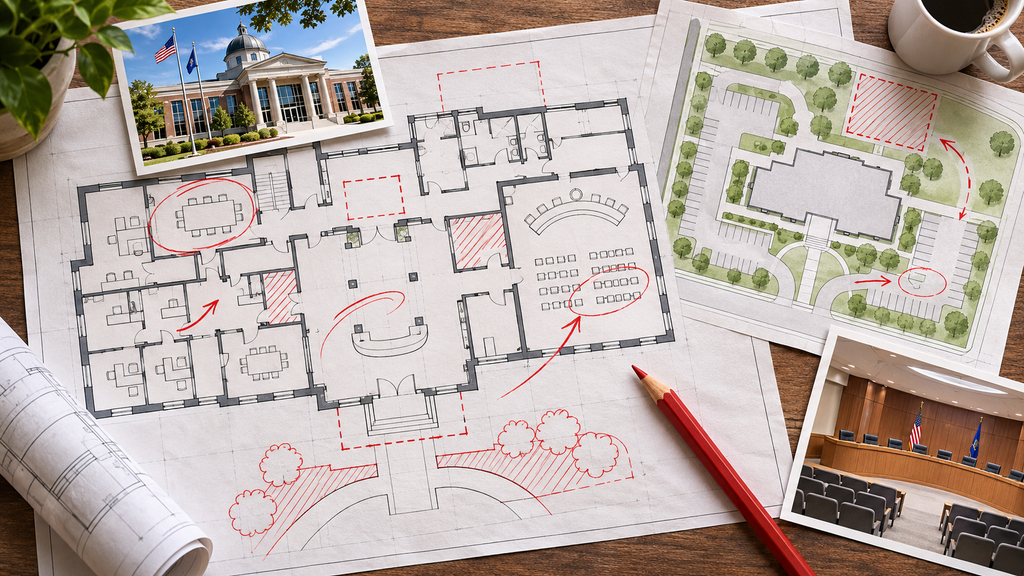
Match the facility need to the next scope
Start by writing the owner’s problem in one sentence. Then identify the work that could help the owner make its next decision.
| What the public record shows | Potential A&E scope | What to verify |
| A maintenance garage can’t accommodate larger fleet vehicles | Architectural programming, site feasibility, or civil engineering | Whether the owner is comparing expansion and relocation |
| An office assessment identifies accessibility and building-system deficiencies | Accessibility design, architectural renovation, or MEP engineering | Whether the owner has funded design or assigned it under an existing contract |
| A campus master plan identifies a building for phased modernization | Programming, renovation design, or construction phasing | Which phase comes first and who is already engaged |
Keep a separate record for each scope you might pursue. If the owner has commissioned an assessment, check whether that agreement also covers programming or design. Look for the agreement, award notice, or task order before assuming a later package will be procured separately.
Use the next decision to qualify the lead
A useful public sector construction lead has a documented facility need, a plausible scope that fits your firm, and a milestone you can track. That milestone might be a feasibility report, a capital budget vote, or a board decision authorizing a design procurement.
Santa Clara County’s phased modernization of Main Jail and Elmwood illustrates how those pieces fit together. The county previously reported commissioning a facility assessment. Its subsequent modernization plan identified needs involving intake, behavioral health, and housing. A firm with relevant experience could track how those needs are divided into future programming and design packages and check which services are already covered. County year-in-review report · Osserva’s Santa Clara County insight
Build a pipeline around the projects your firm can serve
Record the owner, facility, documented need, likely next scope, funding status, and next public decision. For each project, identify what you still need to verify and set a follow-up around the milestone. That gives your business development team a clear reason to revisit the lead.
For more examples across building types, read Architecture and Engineering for Construction.
Want to see early public construction opportunities that fit your firm’s services and territory? Tell Osserva who you sell to.
Resources
- County of Santa Clara’s 2025 Year in Review — County report covering the facility inspection and needs assessment that preceded the modernization plan.
- Osserva’s Santa Clara County Jail Modernization Signal — An early A&E signal covering planned improvements at Main Jail and Elmwood.
- Architecture and Engineering for Construction: How to Identify Early Project Signals — Osserva’s companion guide to spotting emerging facility needs across public building types.