
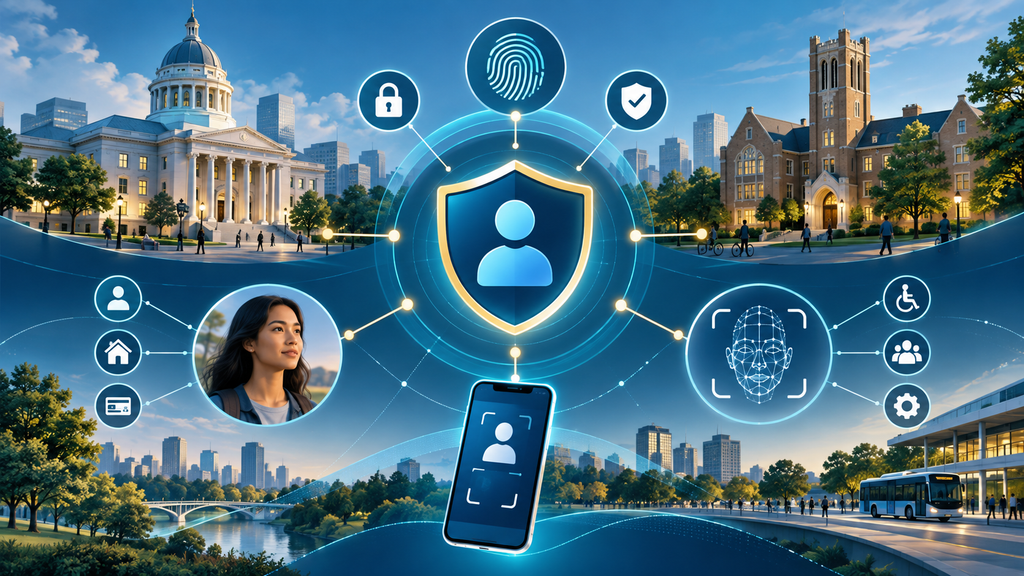
Synthetic identities, data breaches, automated attacks, and generative AI have changed digital identity risk.
NIST Special Publication 800-63 Revision 4 updates federal guidance for identity proofing, authentication, and federation. Its influence is also likely to shape how municipalities, universities, and public-sector vendors evaluate digital identity services.
The central shift is clear. Identity can no longer be treated as a one-time verification event.
Identity Proofing Must Address Injection Attacks
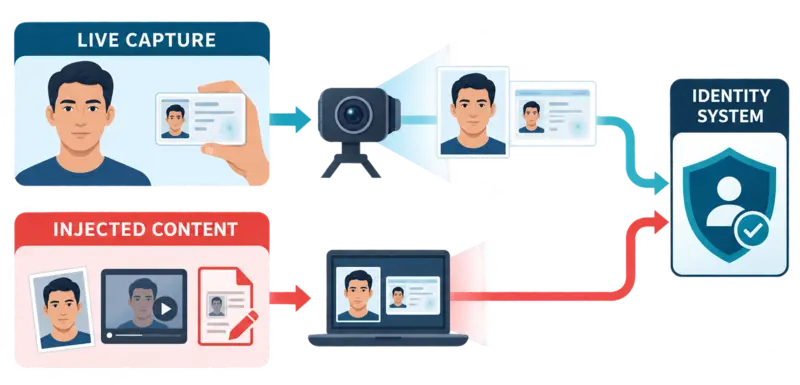
Remote identity proofing often asks an applicant to capture an identity document and submit a photograph or video.
An injection attack attempts to introduce manipulated content directly into the application or capture process. Instead of presenting a false document to a camera, an attacker may supply fabricated imagery, replayed video, or altered data.
Organizations evaluating identity-proofing technology should ask:
- How does the system detect injected content?
- How is device and session integrity evaluated?
- What signals identify replayed or synthetic media?
- How is document authenticity established?
- When are suspicious submissions escalated?
- Does testing include adversarial
Facial matching alone is not a complete fraud-control strategy if the system cannot verify the source material.
Deepfake Detection Can Create Access Barriers
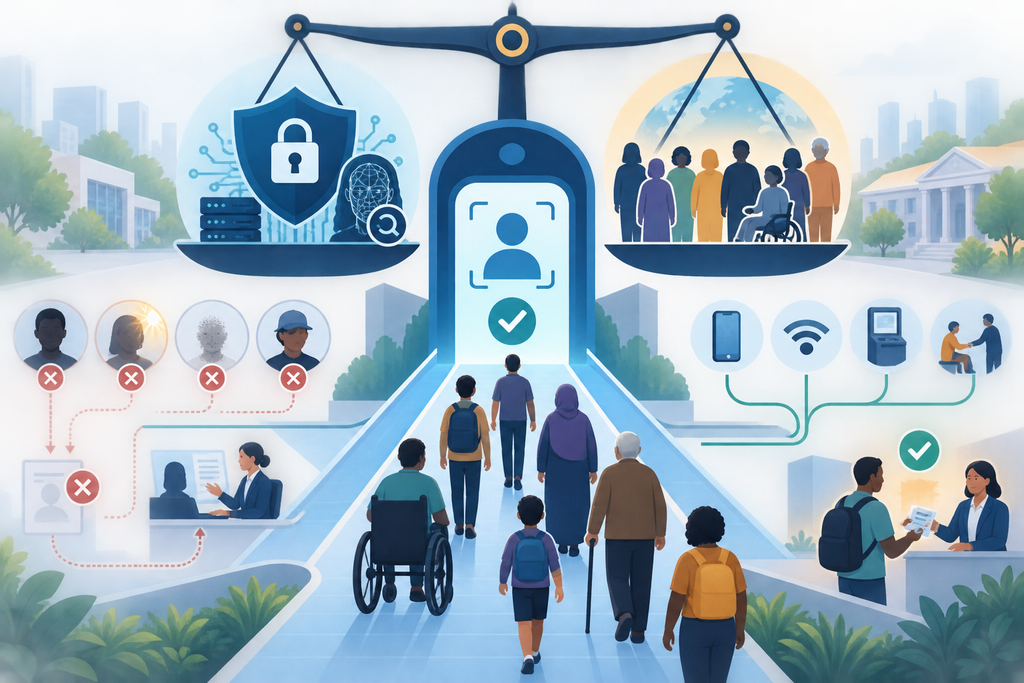
Deepfakes make synthetic images, audio, and video easier to produce. Stronger detection is necessary, but aggressive controls can also reject legitimate users.
Camera quality, connectivity, disability, age, document condition, and other factors can affect verification results. Public organizations should measure more than fraud detection.
Relevant metrics include:
- False acceptance rates
- False rejection rates
- User abandonment
- Manual-review volume
- Time required to resolve failures
- Performance differences among user groups
A system that reduces fraud while excluding eligible residents or students creates a different operational risk.
Match Identity Assurance to Service Risk
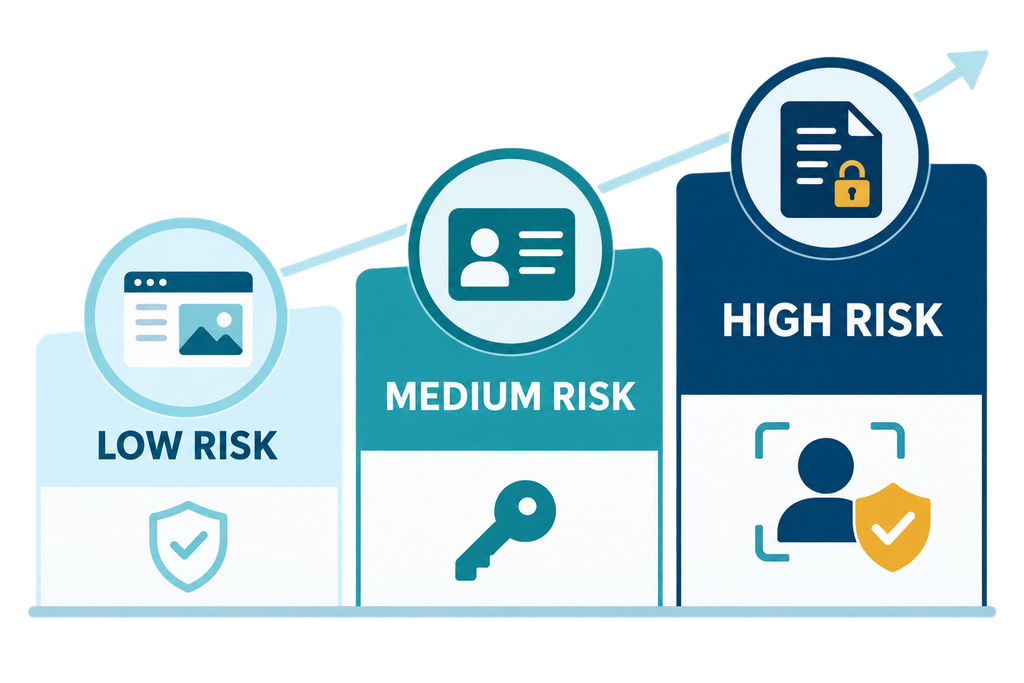
Not every government service requires the same level of identity proofing. Viewing public information should not require the same controls as accessing sensitive records or authorizing a financial transaction. Organizations should first assess the consequences of an incorrect identity decision.
Key questions include:
- What harm could result from identity fraud?
- Is a verified real-world identity necessary?
- What personal information must be collected?
- Can the risk be reduced with less intrusive controls?
- What happens when automated verification fails?
- Is an assisted alternative available?
This approach reduces unnecessary friction while preserving stronger controls for higher-risk services.
Evaluate Fraud Prevention and Privacy Together
Identity systems may collect government identifiers, document images, facial data, addresses, device information, and behavioral signals.
More data may improve fraud detection, but it also increases privacy, retention, breach, and vendor risk.
Public-sector contracts should address:
- Data retention
- Secondary use
- AI model training
- Subcontractor access
- Breach notification
- Data deletion
- Audit rights
- Data return at termination
Data minimization is both a privacy principle and a security control.
Plan for Passkeys and Account Recovery
NIST 800-63-4 reflects the broader shift toward phishing-resistant authentication, including passkeys and other cryptographic methods.
Deployment still requires careful planning. Municipalities and universities must account for device loss, shared devices, accessibility needs, limited digital resources, and account recovery.
A secure login method provides little protection if the recovery process becomes the easiest route for account takeover.
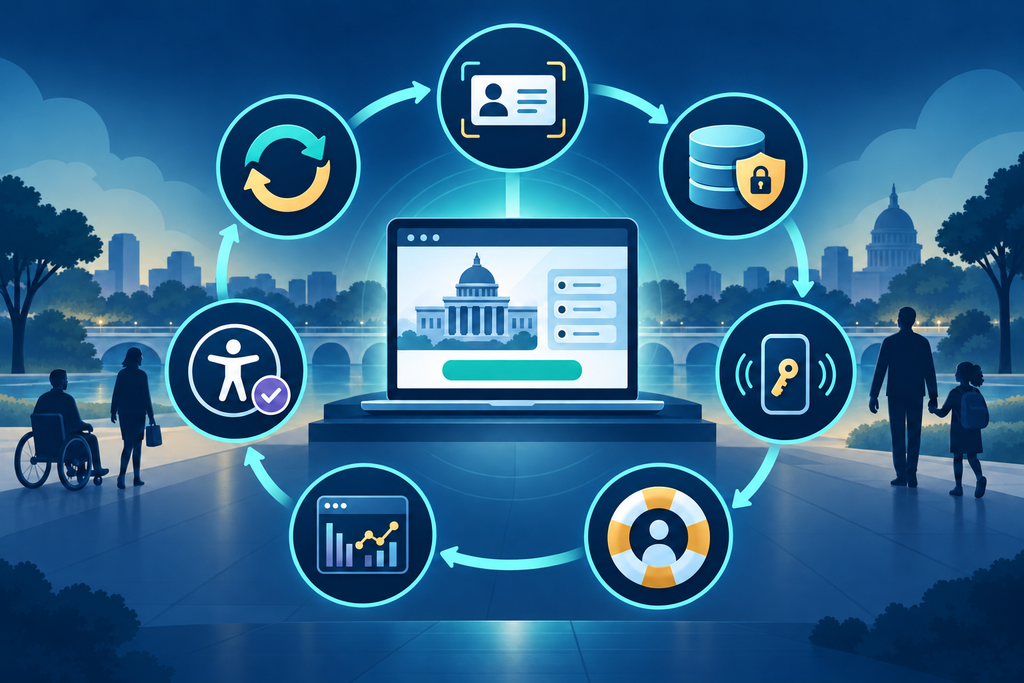
Monitor Digital Identity Continuously
Fraud patterns change, detection models drift, and new attack tools emerge. Identity controls should be evaluated throughout their operational life.
Organizations should monitor proofing completion, failed verification, manual reviews, recovery fraud, suspected injection attacks, help-desk demand, and accessibility outcomes.
Government digital identity is not simply a cybersecurity feature. It determines who can access a public service, what information they must provide, and what happens when the system makes a mistake.
The goal is not maximum friction. It is a defensible balance among security, privacy, accessibility, and service delivery.
Referenced in this Article: NIST SP 800-63-4 Digital Identity Guidelines and NIST’s Revision 4 summary